
Savage Resident Lookup Records
One official record rarely settles identity. The county property system is useful for a parcel and its tax information, while ScottGIS3 can join an address or taxpayer name to a nine-digit PID, the parcel identification number. A public court index can establish whether a name appears in a case. MNVotes is a tightly controlled address-and-identity check. State and county vital routes can confirm an event only within their access rules. Use the record that fits the question, then seek an independent match before treating two similarly named people as one person.
| Official record | Question it can answer | Savage route | Access boundary |
|---|---|---|---|
| Parcel and tax roll | Which PID, situs, and tax-mail address are listed? | Scott County Property Information | Free, weekly updated, reference-only; mailing address is not occupancy proof. |
| GIS taxpayer and parcel map | Which parcel matches an address or taxpayer name? | ScottGIS3 | Current map and tax links; layer dates vary. |
| Court case index | Did a named party appear in a public court matter? | Minnesota Court Records Online | Some files are restricted or sealed; public documents have date and category limits. |
| Voter status | Does a named voter match one stated address? | Minnesota Voter Status Check | Individual match only, not a street roster. |
| Vital and probate trail | Is there an indexed event or an estate case? | MNHS People Records Search and Scott District Court | An index is not a certificate; birth and court restrictions apply. |
If only an old address is known, identify the PID and legal description first, then use deeds and dated directories to test the time period. The separate Savage street directory route is better for a whole address or street. A one-person question belongs here because it depends on comparing name variants, dates, and the right custodian.
Savage Court Records Search
Savage is served by Scott County District Court in the Tenth Judicial District. Its official statewide portal, MCRO, separates Case, Document, Hearing, and Judgment searches. For a party name, start with exact spelling, then test a middle initial, former name, business name, a wildcard, or the portal’s Sounds Like option. A pending criminal matter may not appear under a defendant name. In that narrow situation, a case number, citation, or attorney/bar search can be the useful alternate path.
| MCRO search family | Useful field | When to use it |
|---|---|---|
| Case | Person name, business name, case number, citation, attorney/bar | Find an indexed public case or work around a name-search limit. |
| Document | Case number | Check documents tied to a known case. |
| Hearing | Person, business, case number, judicial officer, attorney/bar | Locate scheduled or recorded hearing information. |
| Judgment | Debtor name | Search a public judgment entry by the named debtor. |
Listed primary documents in major and minor criminal, civil, formal or other probate, guardianship, conservatorship, and trust categories are remotely available from July 1, 2015. MCRO also lists specified judgments, orders, opinions, and notices from July 1, 2005 through June 30, 2015. Downloads cost nothing, but they are not certified. Family access is narrower, and juvenile, civil-commitment, domestic-abuse, harassment, CHIPS, sealed, and other restricted records do not become public through a name search.
For a permitted file copy, Scott Court Administration is at the Justice Center, 200 Fourth Avenue W, Shakopee. Requests can be made by email, fax at 952-496-8211, mail, phone, or in person. A plain copy has no listed fee. A certified copy is $14 per document, an exemplified copy is $14, an exemplified-and-certified copy is $28, and scanning is $25 for up to 50 pages. Confirm the current total and delivery charges before ordering.
The Scott County Jail Roster is a separate current-custody source, not a court docket or identity verification. It can help distinguish which office holds a record, but a roster entry does not establish guilt, residence, or the final court outcome.
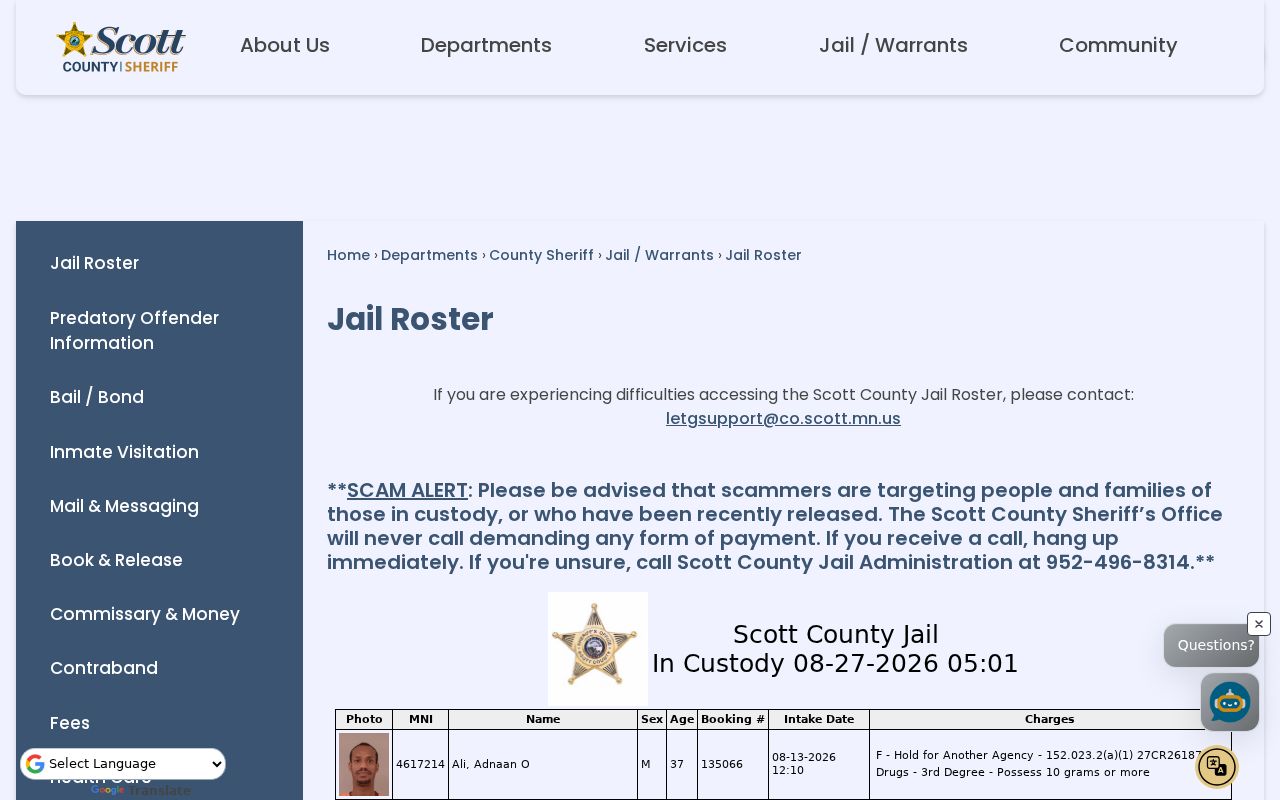
Use the jail page’s official contact and scam warning rather than a caller’s instructions, then verify any case details through MCRO or Court Administration.
Savage Court Result Fields
MCRO results should be read as an index to a case, not as a biography. A public result can include the court or county, case number, case type, filing date, status or disposition, and party names with roles. Where public, it may also show an attorney or bar number, hearing date and time, judicial officer, courtroom, document title and filing date, plus an order, judgment, notice, or document download link. Compare those fields with a known address, date, and name form before drawing a conclusion.
- Case header: court, county, case number, type, filing date, status, and disposition.
- Party entry: public person or business name, role, associated case number, and attorney details when shown.
- Event area: hearing date and time, courtroom, judicial officer, and public document title.
- Judgment area: debtor-name search result and judgment information when public.
- Search caution: an absent pending criminal name result is not proof that no case exists.
The state’s BCA criminal-history search is a different product. It requires first name, last name, and date of birth and should not be substituted for a court docket search. Federal matters use PACER, also separate from the Scott County district court record.
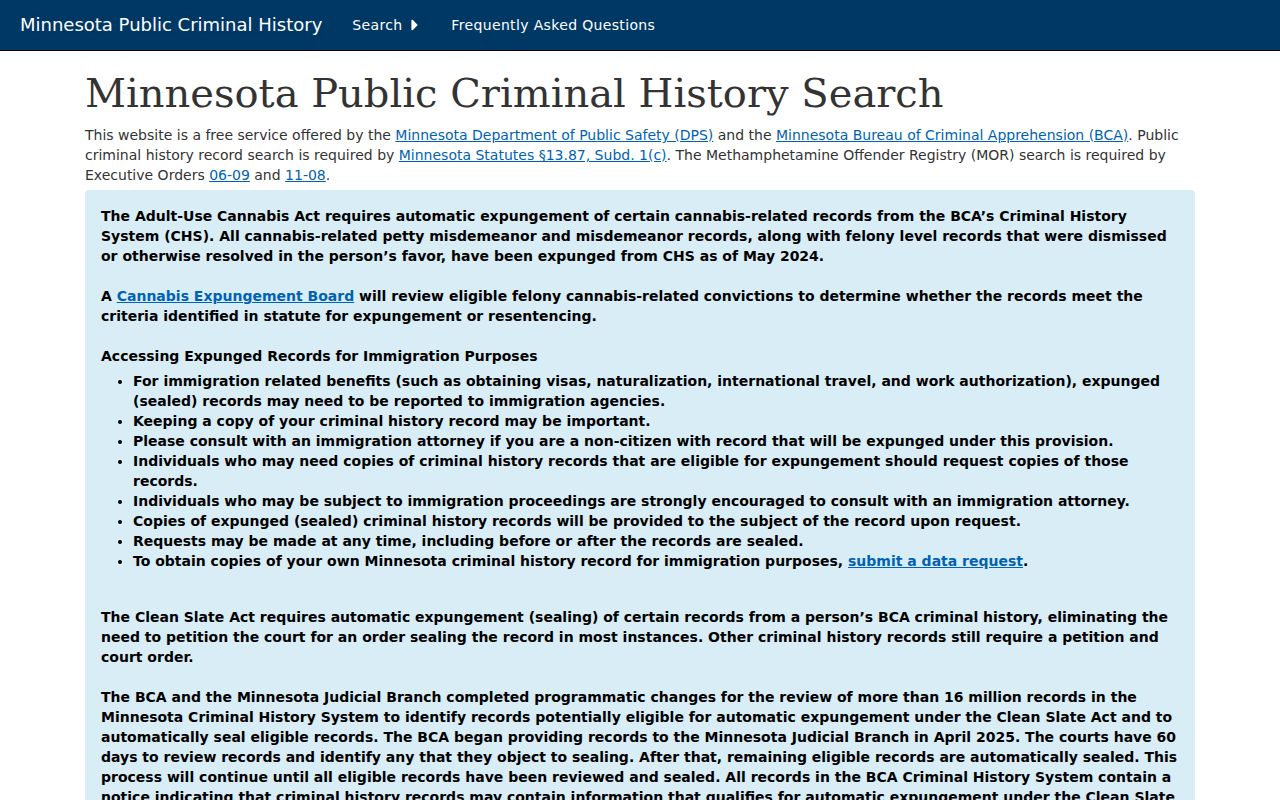
Keeping the court index and criminal-history channel distinct prevents a common same-name error: each source has its own scope, fields, and access rules.
Savage Resident Lookup Verification
Build a candidate identity before ordering a copy. The strongest combination is a full name, approximate age, known Savage street or organization, and a second independent fact. A current parcel result may lead to a PID and legal description, but its situs is the physical parcel address and its mailing address is simply where tax correspondence goes. Neither field alone proves that a person currently occupies the place. MNVotes can confirm a specified name, date of birth, and address relationship, but it cannot be used to create an open street list.
- Search the property portal by address or PID, or ScottGIS3 by taxpayer name, and record the PID, legal description, situs, and date.
- Run the full name and reasonable variants in MCRO. Compare court, party role, case date, and public status against the candidate facts.
- Use MNVotes only with the person’s first name, last name, date of birth, city, house number, and street. A match is a check of that stated record, not a roster result.
- For an event that needs documentary proof, use the vital-record or court-copy custodian and request the permitted plain or certified copy.
- Docket
- A court’s running case record, which can list parties, filings, hearings, and status.
- Index versus image
- An index points to a record. An image is the actual scanned document, which may have a different access rule.
- Certified copy
- A copy authenticated by the custodian for an official purpose; it is different from a free online download.
- Situs address
- The parcel’s physical location for tax and mapping purposes, not necessarily the taxpayer’s mailing address.
Savage Voter Status Match
The Minnesota Voter Status Check is designed to test one registration. It requires first name, last name, full date of birth, a search geography, city or township, house number, and street; ZIP and county are conditional on the selected search mode, while a unit may be needed for an apartment. The service updates nightly, although registration processing can take up to 14 days. Try the registered spelling and the correct unit, then use the Scott County branch if a ZIP-mode search does not find the record.
Minnesota Statutes section 201.091 makes the distinction important. The public voter list has specified fields such as name, address, year of birth, voting history, telephone number if supplied, and voting districts, but it excludes full dates of birth and other identifiers. The law restricts sale, publication, searchable-database use, copying, and access. Protected voters and Safe at Home participants have additional safeguards. This check should stop at those boundaries rather than treating a nonmatch as a reason to seek private location data.
Note: A voter-status confirmation is a current registration check, not evidence of a person’s past occupancy, family members, or legal identity.
Savage Vital Record Indexes
The Minnesota Historical Society People Records Search provides a useful historical starting point for births indexed from 1900 through 1934 and deaths indexed from 1904 through 2001. An indexed name and date can support a genealogy question, but the index is not the certificate. Minnesota birth information is confidential until 100 years after birth unless an eligible requester or legal route applies under Minn. Stat. section 144.225. A noncertified death record is public, while certified copies still require the relevant eligibility, identification, and attestation.
For a Savage event, Scott County Birth, Death & Marriage Customer Service is the local route at 200 Fourth Avenue W in Shakopee. The county accepts death-certificate requests by email, mail, or in person and requires the application details it specifies. State Vital Records has mail and fax channels, rather than ordinary walk-in service. Marriage certificates come from the county that issued the license. A divorce decree comes from the district court that handled the case.
Adoption and birth-parent questions have a different route. Minnesota adoption identifying information is confidential under chapter 259. An adult adoptee, birth parent, or adult sibling should use state or agency post-adoption services, the consent and contact process, or a legally authorized intermediary, not an unrestricted birth-certificate request.
The state’s Vital Records service overview explains the distinct certificate routes and eligibility rules.
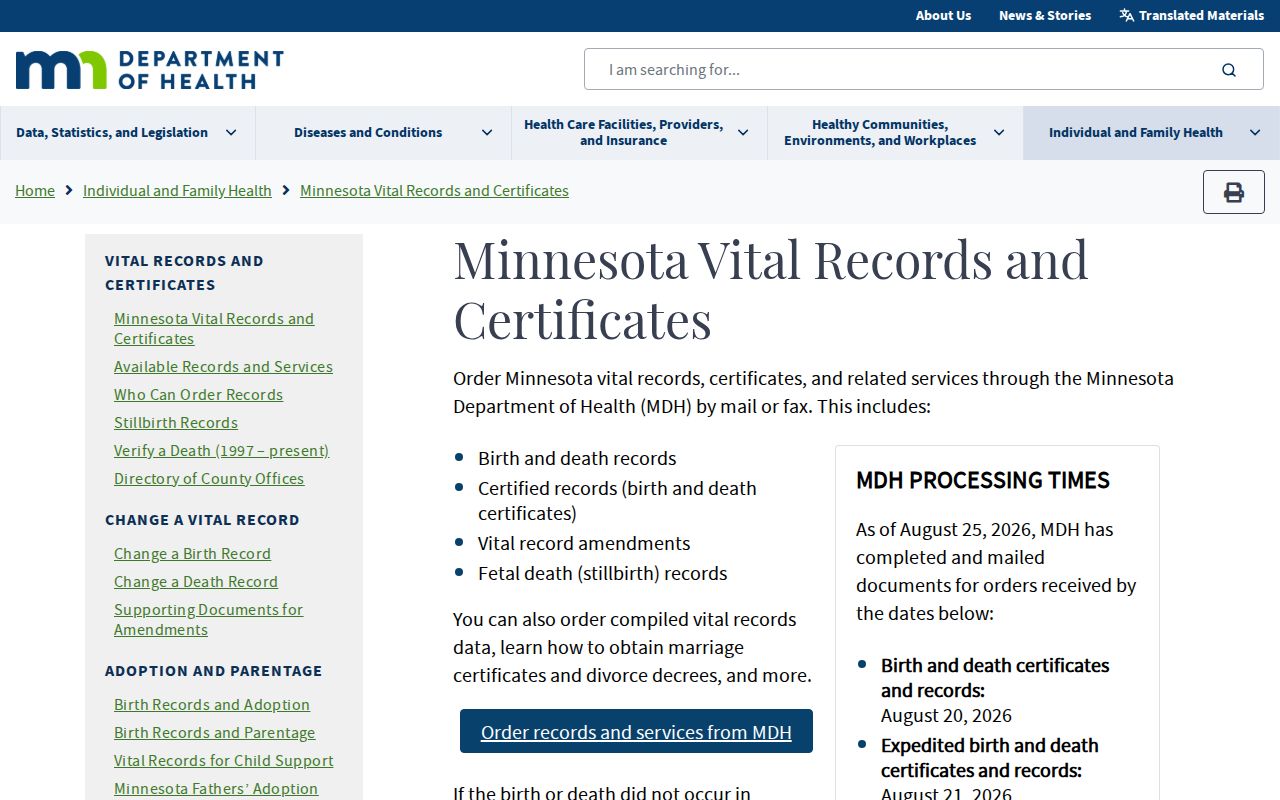
Use the custodian’s current application and fee page before sending identification or payment, because the record type and copy format determine the route.
Savage Organization Records
A name connected to an organization may be better tested through a public filing or credential than through an address search. The Minnesota Secretary of State business search covers entity, assumed-name, UCC, and related filing records. It can show public filing parties, a registered agent or office, and filing history. A filing agent is not necessarily an owner, member, or shareholder, and the Secretary of State’s paid custom name search expressly does not certify those relationships.
For a regulated credential, use the Minnesota DLI license lookup or the appropriate state Health or Agriculture registry. Those searches have their own fields and update cycles. A mailing city or business contact in a result is not proof of a Savage residence. Minnesota’s unclaimed-property search is free and can use last name, business, city, ZIP, or property ID, but a possible claim is not an address confirmation.
The official Secretary of State search is the appropriate source for a public filing relationship.
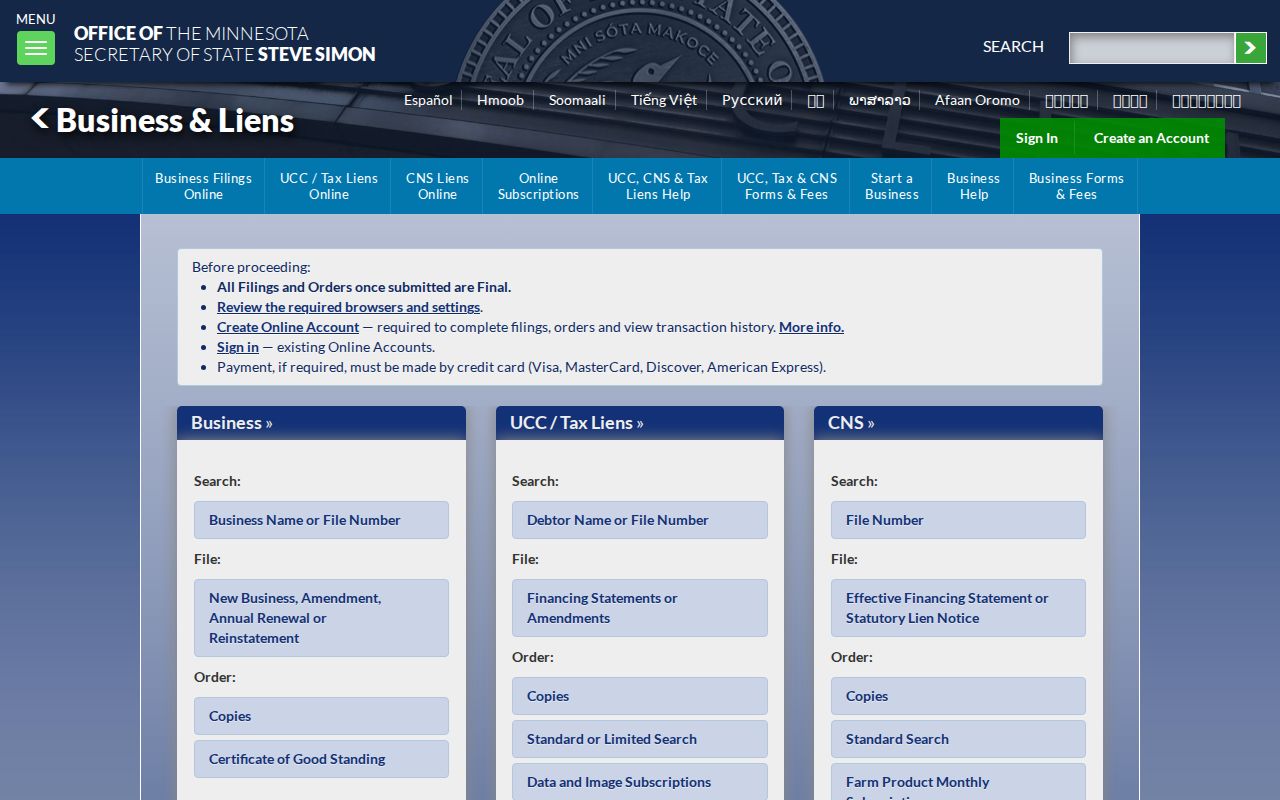
Read each filing as a dated business record, then use its listed role and filing history rather than guessing at a person’s current connection.
Savage Historical Name Search
A former name or an old family question often needs an archive, not a modern lookup. The Minnesota Historical Society’s Scott County naturalization finding aid covers records from 1853 through 1929, but its personal-name index is incomplete and out of order. Search the index, then inspect the surrounding volume. That extra step can make a real difference for an immigrant family whose spelling changed between a declaration, a directory, and later county records.
For heirs, begin with a public probate docket or case number, then request a permitted court file or copy. Scott County Historical Society obituary cards, newspapers, cemetery maps, and church registers can supply a dated bridge to a personal representative or family name. A mailing address in a probate filing is dated evidence only. It should not be presented as a current location.
Savage Privacy Limits
Minnesota’s Government Data Practices Act, especially Minn. Stat. section 13.03, presumes public government data is inspectable unless another classification closes it. That does not override a sealed court record, vital-record confidentiality, voter restrictions, or motor-vehicle privacy rules. When a specific public record is missing or unclear, a focused Scott County data request can ask the custodian for the record’s existence, classification, request route, or copying cost. It is not a way to obtain protected data.
The Minnesota Safe at Home program protects eligible participants’ actual residence information. The Minnesota Consumer Data Privacy Act can provide requests to covered private businesses, but it does not erase a lawful government record. Ask the original custodian to correct or redact nonpublic information where the law permits, and do not repost sensitive identifiers from a deed or court document.
Note: A sealed file, protected address, or no-result is a privacy boundary, not an invitation to search around the restriction.