
Savage ZIP Code Directory
Savage has one documented current standard-delivery ZIP in the official sources reviewed: 55378. Postal boundaries organize delivery, not city government, parcels, school districts, or a resident roll. That is why a complete address still needs USPS verification, even when it is generally described as being in Savage. County offices in Shakopee use their own mailing ZIP, and a neighboring-city ZIP in an address line should never be assumed to describe a Savage street.
| ZIP | Area represented | Post office | Research note |
|---|---|---|---|
| 55378 | Current standard delivery for Savage in the reviewed official sources | Savage Post Office, 6100 McColl Drive, Savage, MN 55378-9901 | USPS should confirm a specific delivery address. |
| 55379 | Shakopee mailing ZIP used by county and library addresses | Not a documented Savage street-delivery ZIP | Do not infer that a Savage address uses it just because a Scott County office does. |
| 55372 | Prior Lake ZIP in the historical postal change | Historical comparison | 117 deliveries moved to Savage 55378 in 2003. |
Only the first row is a current Savage standard-delivery finding. The other rows explain common search confusion. Authoritative static sources did not establish current Savage PO-box-only or unique-institution ZIPs, nor did they provide a complete city-boundary postal polygon. Treat those as questions for a current USPS address result instead of filling the gap with an assumed range.
Savage Postal Directory Delivery
The Savage Post Office listing identifies the office at 6100 McColl Drive, Savage, MN 55378-9901. Its published retail hours are Monday through Friday from 10:00 a.m. to 5:30 p.m. and Saturday from 10:00 a.m. to 1:00 p.m. The PO-box lobby is listed as open 24 hours, and the posted phone is 952-707-0857. Those details help with postal service, but the office listing is not a directory of delivery customers.
USPS is the right keeper for a delivery address. The assessor is the right keeper for a parcel. The city handles planning and zoning questions, while Scott County maintains property, land-record, and GIS functions. Keeping those roles separate prevents a ZIP from becoming a false shortcut for city limits or ownership.
The official post-office location page supplies the current service details used here.
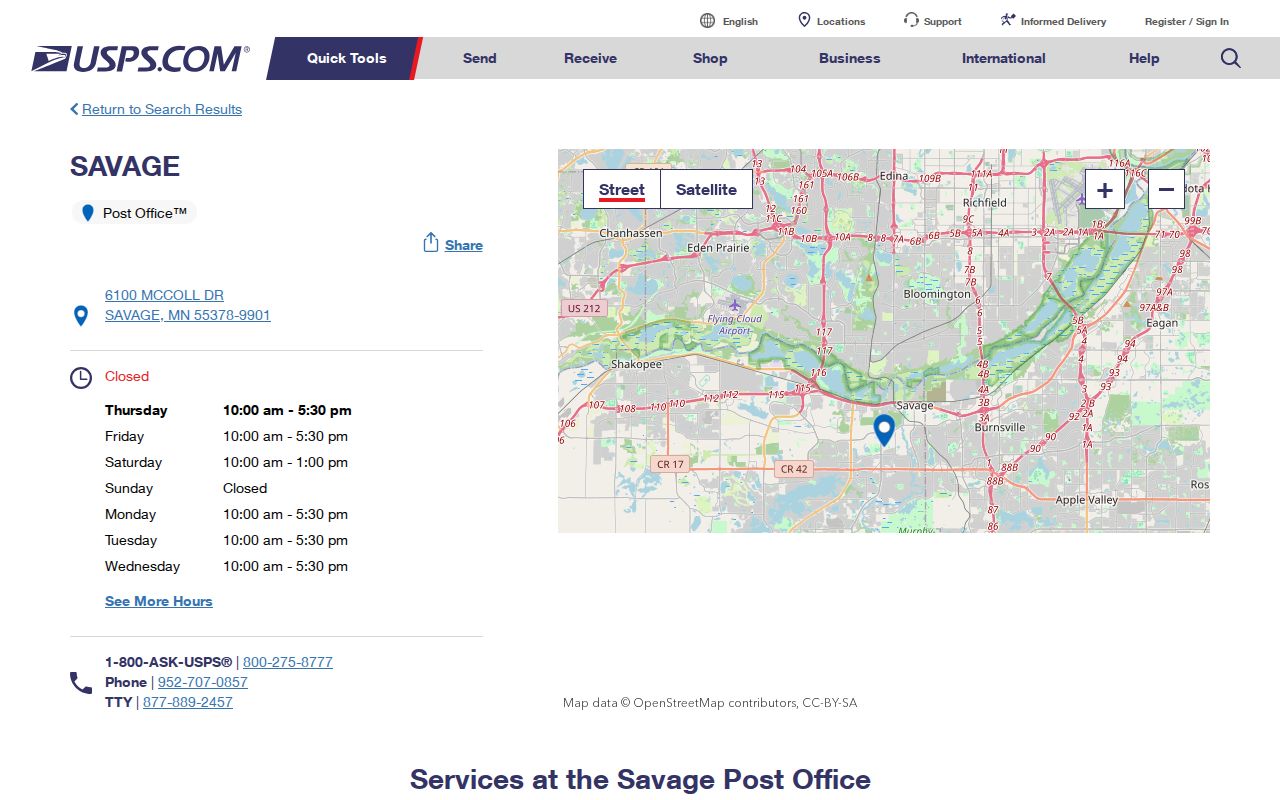
Check the live listing before a postal visit, because retail and lobby service information can change independently of the ZIP assigned to an address.
Savage Postal Directory Change
Postal history explains why an older record can appear under another nearby ZIP. A USPS Postal Bulletin records that a new Savage 55378 office and ZIP were established effective July 1, 2003. The bulletin says 117 deliveries moved from Prior Lake 55372 into the new Savage service. This is a delivery migration, not proof that all addresses or municipal boundaries changed at once.
Historic name searching needs a second geography check. Savage was called Hamilton before the city’s 1904 renaming, so an old directory, deed, newspaper, or map may use Hamilton while a later postal record uses Savage. No verified Savage street-renumbering project was located. When an older address will not match, compare its legal description, subdivision or plat, nearby parcels, and both town names rather than trying to force the modern ZIP onto the older record.
The published bulletin is the source for the 2003 delivery shift.
That limited change is useful context for an address history, but a current delivery claim still requires a fresh USPS search.
Savage ZIP Code Search
The official USPS delivery lookup has two useful modes. By-address search requires a street, city, and state; company, apartment, and ZIP are optional. By-city-and-state search requires a city and state and returns ZIP choices. Use the complete address mode when checking a property record, because it tests delivery formatting more precisely than a city-level result. USPS warns that standardizing an address does not confirm that a named person or company is there.
| USPS field | Required? | How it helps |
|---|---|---|
| Company | Optional | Extra delivery detail; it does not verify an organization’s current connection. |
| Street | Required by address | Core input for a standardized delivery result. |
| Apartment or unit | Optional | Needed when the postal address includes a unit. |
| City and state | Required | Sets the postal place and state for the query. |
| ZIP | Optional by address | Useful to test a known ZIP against the returned standard. |
The official USPS lookup form is the source for those input rules.
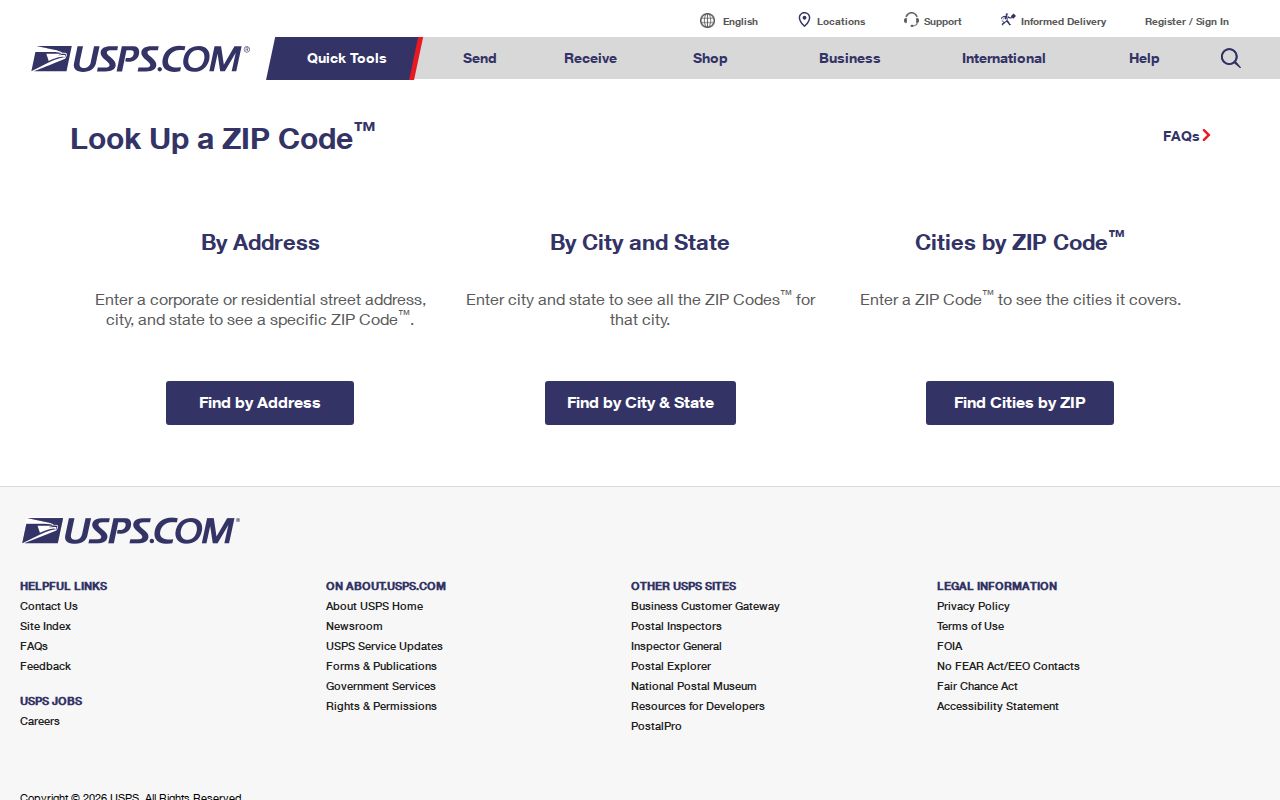
A normalized result can correct a street format or ZIP, but it remains postal information rather than proof about a household or recipient.
Savage Postal Directory Parcels
Scott County does not document a verified ZIP-wide resident dump. The property information portal is built around address and nine-digit PID searching. It can show a situs address, legal description, building features, valuation and tax detail, sale information, recorded-document links, and a tax mailing address. The portal is updated weekly and is reference-only. Its mailing address field can be outside Savage, so it is not proof that the taxpayer occupies the parcel.
ScottGIS3 can search an address, taxpayer name, PID, intersection, section, or coordinates and display parcel layers. It is useful after USPS identifies the proper street format. Neither county tool is documented as an all-residents search by ZIP. If a property result is needed, take the city and delivery address from USPS, then search one address or PID at a time and preserve the result date.
- Use the USPS by-address search with the complete street, city, and state, then record the returned delivery ZIP and standardized format.
- Search Scott County Property Information by that address or by a known nine-digit PID. Do not combine address and PID in one query.
- Open ScottGIS3 for the parcel boundary, map context, taxpayer-name option, and tax or property links that apply to that one parcel.
- Where a named voter must be checked, use MNVotes with the full name, date of birth, city, house number, street, and the applicable ZIP or Scott County mode.
Once ZIP geography has narrowed an address, the Savage street directory has the fuller parcel-to-deed workflow. That separate process follows one street or parcel rather than turning a postal area into a people list.
Savage Postal Directory Voter Match
MNVotes has a ZIP geography branch, but it is still an individual check. The Minnesota Voter Status Check requires first name, last name, date of birth, city or township, house number, and street. ZIP is required only when ZIP mode is selected; county is the alternate search geography. Apartment or unit information can be required if the registration uses it. A successful result confirms registration-related status for that supplied identity and address, not every voter within 55378.
Minn. Stat. section 201.091 limits voter-list uses and does not permit publishing the list as a public searchable database. Full dates of birth and other identifiers are not public-list fields. The service updates nightly, but processing a registration can take up to 14 days. Protected voters and Safe at Home participants are not a gap to work around. They are a legal boundary.
Note: ZIP mode narrows a single registration query; it does not convert the voter-status form into a Savage ZIP resident list.
Savage ZIP Code Boundaries
ZIP lines and municipal borders have different keepers. USPS assigns delivery geography. Scott County records parcels through PID and legal description. Savage city limits can be checked against map layers and local planning records. These systems may meet cleanly on many addresses, but river corridors, suburban edges, and nearby Prior Lake and Shakopee make assumptions risky. Use USPS for the delivery address and county or city maps for the governmental geography.
A situs address is a parcel’s physical location. A tax mailing address is where tax correspondence is sent. A PO Box can be only a mailing destination. The recorder’s documents are indexed by legal description and document number, while a voter record uses a residence address subject to protections. This is why a shared ZIP does not establish city residency, parcel ownership, or a household connection.
Savage Postal Directory Terms
Postal terms describe delivery routes, while land-record terms describe a property. Keeping the words straight makes a ZIP search easier to verify and prevents a mail result from being mistaken for a deed or county map record.
- ZIP
- A Postal Service delivery-geography code used to route mail, not a city-boundary designation.
- ZIP+4
- The basic ZIP plus four extra digits that narrow sorting or delivery detail for an address.
- PO-box ZIP
- A ZIP used for post-office boxes; it may differ from the physical location of a recipient or parcel.
- Unique ZIP
- A ZIP assigned to one large institution or organization; no current Savage example was verified in the reviewed sources.
- Carrier route
- A mail-delivery route within postal operations, not a public roster of people on that route.
For county research, a PID is the more durable cross-record key. It links a parcel to legal, tax, map, and land-record information even when a mailing format or ZIP has changed over time.
Savage ZIP Code Directory Limits
A ZIP code directory can show postal geography and the right search path. It cannot confirm who receives mail, who lives at a parcel, or whether a current postal address falls inside every jurisdiction a reader has in mind. The reviewed sources did not identify a general Savage ZIP resident registry, a verified county control that returns all parcels by ZIP, a complete current ZIP boundary polygon, or a confirmed citywide PO-box or unique-ZIP inventory. Those absences should remain visible in the search method.
For a question that truly requires public government data, a targeted Scott County data request can ask for a specific record or the custodian’s access route under the Minnesota Government Data Practices Act. Privacy classifications still apply. Safe at Home addresses, protected voter information, and private data must not be reverse-engineered or shared. A precise request to the proper office is more useful than broad searching when a postal clue reaches its limit.
Note: USPS, county, and city records each describe a different part of an address, so retain the source and date for every result.